
In Northwest Florida, we live in a “soil transition zone.” This variation is exactly why one neighbor has a thriving, lush garden while the other is constantly replacing dead shrubs.
At Terrascape Design and Landscaping, we believe a great landscape starts from the ground up. Here is what you need to know about the two faces of Pace soil—and how to choose the right plants for each.
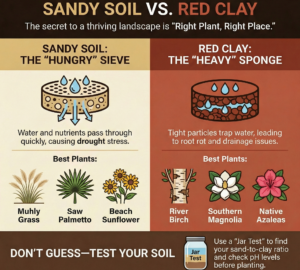
1. The “Hungry” Sandy Soil (Entisols)
Most of Pace is built on ancient river deposits, resulting in soil that is up to 80% sand.
- The Problem: Sand particles are large. Water and nutrients pass through them like a sieve. This leads to drought stress and “nutrient washout,” where your expensive fertilizer ends up in the groundwater instead of your plants.
- The Best Plants: Look for “Xeric” or drought-tolerant natives.
- Muhly Grass: Offers stunning purple plumes in the fall and thrives in dry sand.
- Saw Palmetto: Extremely hardy and provides a high-end, tropical structure.
- Beach Sunflower: A rugged groundcover that loves the sun and the sand.
2. The “Heavy” Red Clay (Ultisols)
As you move further north toward Chumuckla or near the local creeks, you’ll hit the famous Georgia-Florida red clay.
- The Problem: Clay is made of tiny, flat particles that pack together tightly. It holds water too well, which can drown plant roots (root rot) and cause major drainage issues on your patio.
- The Best Plants: Choose “wet-foot” tolerant species.
- River Birch: A beautiful tree that loves moisture and can help manage wet spots.
- Southern Magnolia: Naturally adapted to heavier, loamy soils.
- Native Azaleas: They appreciate the acidity often found in our clay-heavy areas.
The Golden Rule: “Right Plant, Right Place”
You shouldn’t fight your soil; you should work with it. Putting a sand-loving lavender plant in a red clay drainage ditch is a recipe for a dead plant.
Before we start any landscape design project, we look for three things:
- The “Jar Test”: A simple way to see your sand-to-clay ratio.
- pH Balance: Pace soil is typically acidic (pH 5.5 – 6.5). We test to see if you need lime to balance it out.
- Compaction: We check if construction “fill dirt” has turned your yard into concrete, requiring aeration or organic amendments.
Don’t Guess—Test.
The secret to a low-maintenance, luxury landscape isn’t more water or more fertilizer; it’s a professional soil analysis and a design that respects the land.
Ready to stop replacing dead plants and start building a backyard that thrives?